How Florida's Climate Affects Your Pool Water Chemistry (And What to Do About It)
Florida's climate is one of the most demanding environments for pool chemistry in the country. For pool owners in The Villages, FL, proper swimming pool water treatment is not a once-a-month task. It is an ongoing responsibility shaped by intense UV radiation, high humidity, frequent summer rain, and Central Florida's mineral-rich fill water. This guide breaks down exactly what Florida's climate does to your pool chemistry and what you can do about it.

How Florida's Heat and UV Radiation Destroy Chlorine
Florida's sun is a chlorine-burning machine. Free chlorine is highly sensitive to UV light, and on a bright Central Florida summer day, an unprotected pool can lose most of its chlorine within a few hours of direct sunlight.
The fix is cyanuric acid (CYA), also called stabilizer. CYA acts as a sunscreen for chlorine, slowing UV degradation so your sanitizer stays active throughout the day. Maintaining CYA in the 30 to 50 ppm range is widely recommended for Florida outdoor pools. Without it, you may be adding chlorine constantly with little effect.
Screened enclosures common in The Villages also create a greenhouse effect that traps heat, which accelerates chlorine loss and requires more frequent chemistry checks than owners typically expect. Effective swimming pool water treatment in these conditions means staying ahead of UV depletion rather than reacting after chlorine is already gone.
What Is Cyanuric Acid (CYA) and Why Does It Matter?
CYA protects chlorine from UV breakdown, but as you use stabilized chlorine tablets over time, CYA levels can climb steadily. This is often called CYA creep.
When CYA climbs above 80 to 100 ppm, chlorine becomes so tightly bound that even a high chlorine reading may not sanitize your water. This is sometimes called chlorine lock. The only way to resolve very high CYA is a partial or complete drain and refill, since CYA cannot be removed with chemicals alone. Monthly CYA testing throughout summer is a practical baseline for Central Florida pools. It makes rising levels far easier to catch before a costly drain becomes necessary.
Managing Alkalinity and Calcium in Central Florida's Hard Water
Central Florida tap water sourced from the Floridan Aquifer carries elevated calcium and magnesium concentrations. Pool owners in The Villages, FL often start with water that is already high in calcium before any chemicals are added.
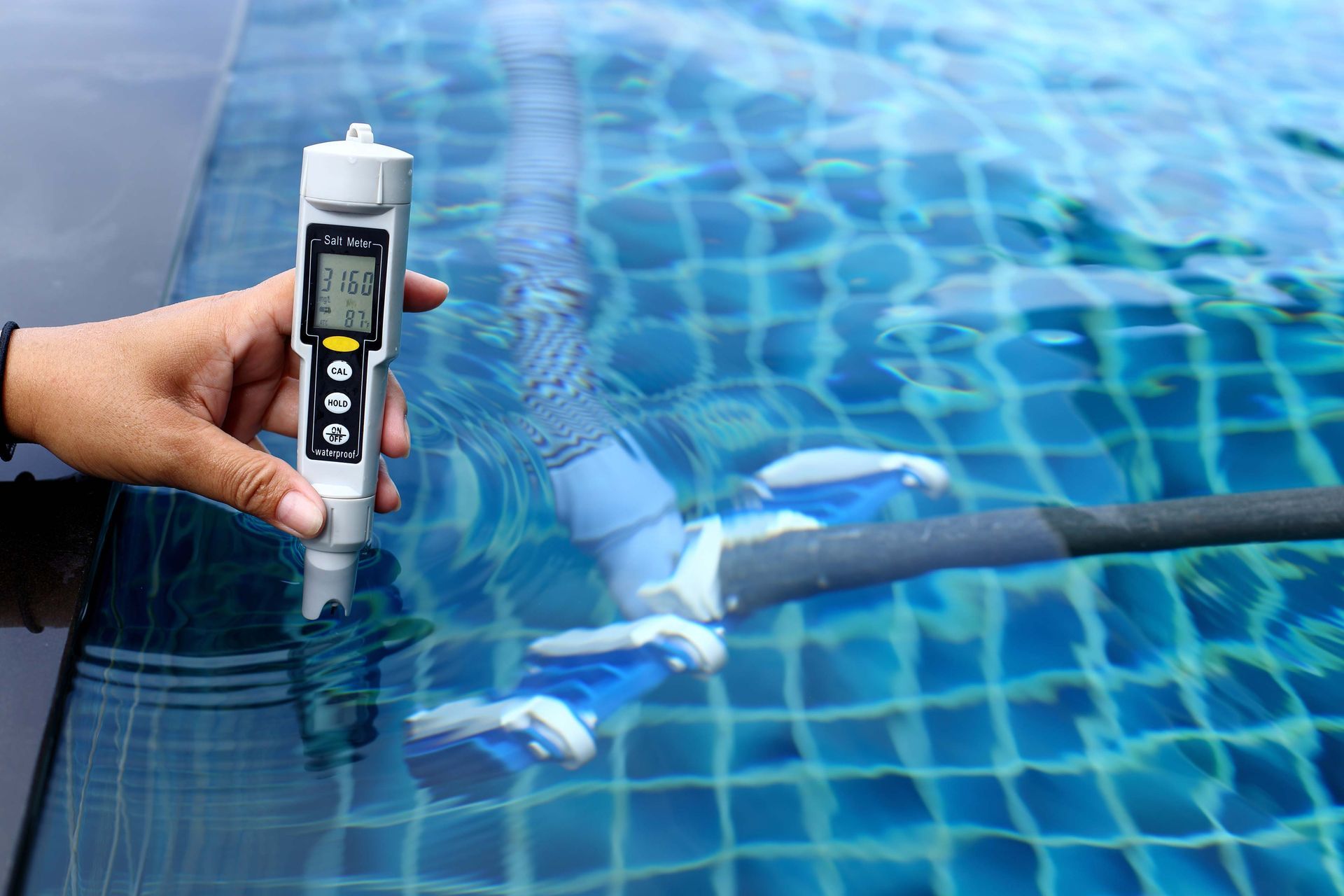
Total alkalinity buffers against wild pH swings. Frequent summer rainstorms can drive pH upward quickly, so testing after major rain events rather than on a fixed weekly schedule tends to produce better results during Florida's wet season, which typically runs June through September.
Calcium hardness that climbs too high leads to scaling on tile, pool surfaces, and equipment. A partial drain and refill, ideally done in late fall or early spring, can reset dissolved mineral levels before they cause permanent damage.
Mustard Algae Prevention in Warm Florida Climates
Mustard algae appears as a yellowish film on pool walls, steps, and shady corners. It brushes off easily but returns fast and resists normal chlorine levels because of its protective coating.
Treatment requires aggressive brushing of every surface, a heavy shock treatment, and a specific mustard algaecide. Any pool toys or cleaning equipment that touched the water during an outbreak should be soaked in high-chlorine water, since mustard algae can reintroduce itself through contaminated gear.
Prevention is the better strategy. Keeping free chlorine in the 2 to 4 ppm range at all times, monitoring phosphate levels, and maintaining proper CYA all reduce the likelihood of an outbreak. Consistent swimming pool water treatment is the most reliable defense against repeat algae problems in Florida's climate.
Monthly Maintenance Checklist for Central Florida Pools
A practical monthly checklist for homeowners in The Villages, FL includes the following steps.
- Test and adjust free chlorine, pH, and alkalinity at least twice per week, especially after heavy rain.
- Test CYA monthly throughout summer and keep levels in the 30 to 50 ppm range.
- Test calcium hardness monthly and plan a partial drain if levels climb too high.
- Apply a phosphate remover once a month during summer, especially after significant rainfall.
- Inspect pump baskets, filters, and equipment during every service visit.
- Brush pool walls and steps weekly to disrupt early algae growth.
- Consider a partial drain and refill in late fall or early spring to reset accumulated dissolved solids.
How Often Should I Test My Pool Water in Florida?
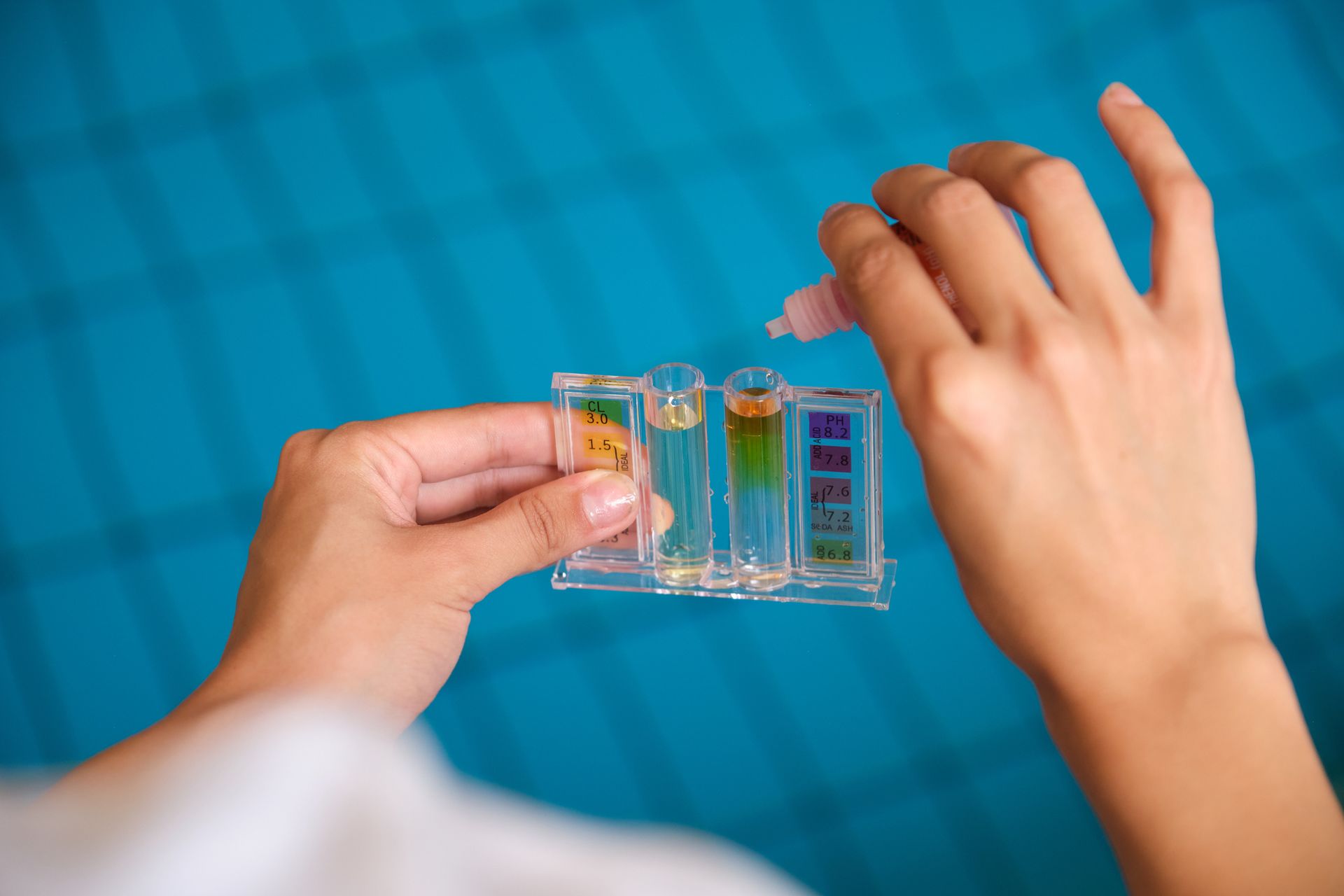
Florida pools benefit from pH and chlorine testing at least twice per week during summer and after every major rainstorm. CYA, calcium hardness, and phosphates are typically tested monthly.
Why Does My Chlorine Disappear So Fast in Florida?
Chlorine breaks down rapidly under direct UV radiation. Without adequate CYA stabilizer, Florida's intense sunlight can deplete free chlorine within a few hours. Maintaining CYA in the recommended range and checking levels regularly helps your sanitizer last through the day.
What Should I Do if My Pool Turns Green in The Villages?
Green water typically signals an algae bloom caused by low free chlorine, often combined with elevated phosphates. Test all chemistry levels, shock the pool, and run the filter continuously. Brush all surfaces, backwash the filter after 24 hours, and retest. If green water returns repeatedly, a CYA or phosphate issue may be the underlying cause worth addressing with a professional who specializes in swimming pool water treatment.
Get Professional Help Keeping Your Pool Clear Year-Round
Florida's climate makes pool chemistry genuinely complex, but you do not have to manage it alone. Spa Kingdom Inc has been serving The Villages since 1999, offering certified technicians with deep local knowledge of Central Florida's water conditions. Their swimming pool water treatment services cover complete water analysis, precision chemical balancing, and algae prevention designed for outdoor pools in this region.
To schedule a consultation or request a quote,
contact the team online or call
(352) 728-0772.